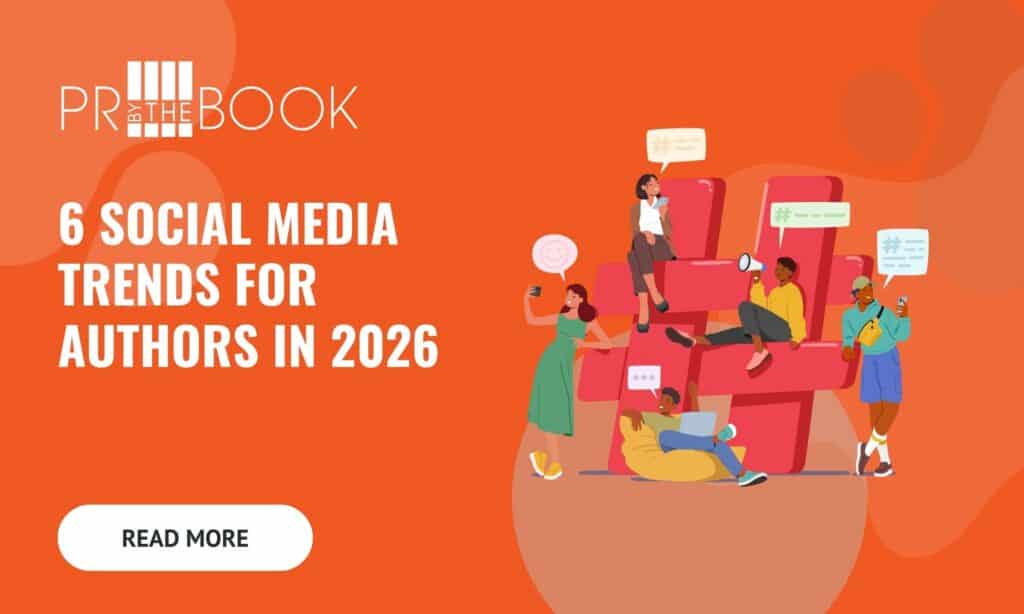
6 Social Media Trends for Authors in 2026
-
 Tara Lehmann
- Reading Time: 5 Minutes


SHARE
We have embraced and integrated social media so deeply that it can be nearly impossible to imagine a time before TikTok, YouTube, Instagram, Facebook, etc., never mind how the concept of social media continues to evolve. It is such a dynamic and often complex system of communication that it can be easy to lose track of how to use it to your advantage.
Here are six key trends that authors can employ to best maximize their platform and presence in 2026:
1. Short-form Video
Short-form videos, most often seen on Instagram Reels and TikTok, are among the most actively engaged-with and watched forms of social media content, and they are only growing as social platforms change, community needs shift, and in-platform viral trends come and go. However, it can be a convenient means of putting yourself as a writer out in the world with quick, highly topical narratives (quick writing tips, micro-scenes, character introductions, etc.), in a way that maintains your authorial presence on the platform, as well as introducing yourself to a new community of readers.
2. Community and engagement
In the early days of social media platforms, the number of followers an account had was the easiest way to determine whether it was reputable and worth following. It is not uncommon for people new to social media to be concerned about their follower count or how to grow their follower base. However, in 2026, it is not the number of followers that leaves an impression, but the level and quality of engagement. Commenting, sharing, saving, messaging—all of it weighs more when approaching an audience. People enjoy knowing that their contribution has been recognized. It also helps build a community among followers and readers, which can, in turn, contribute to overall follower and engagement growth as you add followers and reciprocate with likes and comments.
3. Authenticity, mental health, and values-driven storytelling
Audiences want real voices and meaningful content—that’s not to say that you can’t copy the next viral trend and have fun, but it does mean that your content needs to address real-world factors rather than aiming just at general promotion. Most people on social media these days are part of a broader shift toward a general desire for connection and purpose. We all just want to be connected to something, and having that authenticity reflected in your content can only help. This can be anything from posting your top favorite things that month, your favorite books, writing tools, behind-the-scenes facts about you and your book, etc. Whether you’re writing fiction or nonfiction, children’s or adult books, mix it up!
4. Bookish and niche subcultures are strong
Everyone is familiar with Bookstagram and BookTok, and thankfully, those two communities don’t seem to be going anywhere. But there are more communities on the platforms than just those two. And many of the communities are tailored to the people most likely to be your readers. If you are interested in specific subjects, subcultures, or topics, communicate with them! Join live reading challenges, create reading lists, leave comments on other people’s posts, message creators you’re a fan of, etc. Use hashtags, social media SEO keywords and phrases, tag reputable members of the community, etc. In 2026, we can’t just post and hope it will be discovered. Sometimes, there is much more work involved in something picking up interest or going viral than we realize.
5. Repurposing and cross-platforming
Don’t forget, sometimes your greatest tools are the ones you already have, and in this case, I mean content you may have already published or written and not found a home for. Just because it has been shared on one platform, such as Facebook, doesn’t mean it automatically appears on other platforms. Nor does it mean that how it’s presented on one platform is how it should be presented on another. For example, how something is drafted and shared on X (Twitter) versus LinkedIn differs because your audience differs. So while the material may be the same, don’t be afraid to adjust the copy before you hit ‘publish.’
6. Social SEO
We’ve all heard mention of SEO and maintaining, updating, and improving one’s website SEO. SEO, or search engine optimization, is the means of including searchable terms to expand discoverability and searchability on sites such as Google. How it works with platforms such as TikTok, Instagram, YouTube, and more is the use of SEO with relevant keywords and terms in content captions, bios, on-screen text overlays, etc., to improve discoverability of the author and their work. The best way to maximize it is to look at publishers and authors who create similar content and examine their engagement. How are they positioning their keywords and phrases? Where are they focusing their SEO? What are their hashtags? Explore what is and isn’t working for similar titles, and apply those insights to your own social SEO.
Are you ready to incorporate these trends into your author journey? Whether you’re an aspiring thought leader or seeking meaningful connections to boost visibility and sales, our book publicity experts can help. Contact us today to create a tailored publicity strategy that puts your book—and your brand—in the spotlight!
Looking for more social tips? Check out:
LinkedIn Strategies Every Author Needs to Know for Success

Tara Lehmann
Positioning: The Cornerstone of Book Marketing
Positioning: The Cornerstone of Book Marketing SHARE Who is this
6 Social Media Trends for Authors in 2026
6 Social Media Trends for Authors in 2026 SHARE We
26 Ways to Promote Your Book (or Brand) in 2026
26 Ways to Promote Your Book (or Brand) in 2026