
BOOK COVER

BOOK DETAILS
Pub Date: March 24, 2026
Genre: Techno thriller/
Sci-fi
Publisher: Girl Friday Productions
Page Count: 306
Format, ISBN, Price:
E-book, 9781967510344, $9.99
Watch Don’s TEDx talk, “Overcoming Imposter Syndrome: Storytellers, Sci-fi, & Unreliable Mirrors.”
ABOUT THE BOOK
It’s not the life you lead; it’s the blood you bleed.
By 2060, society has been divided into two classes by a groundbreaking discovery: An afterlife exists, but only for the genetic few. Ascendants are genetically destined to experience what comes after. Biomasses are condemned to oblivion.
This new era of Ascension is controlled by The Jacobs Institute, a powerful research organization challenging the limits of consciousness and morality. Ascendants follows three characters caught up in The Institute’s web of secrets—the visionary scientist who started it all, a grieving husband beholden to his belief, and a fierce young woman grappling with what society has become. What will it cost them to unravel the science that fuels The Institute’s power?
A gripping techno-thriller, Ascendants is both a warning against the weaponization of science and belief, and a vision for the survival of humanity.
ABOUT THE AUTHOR
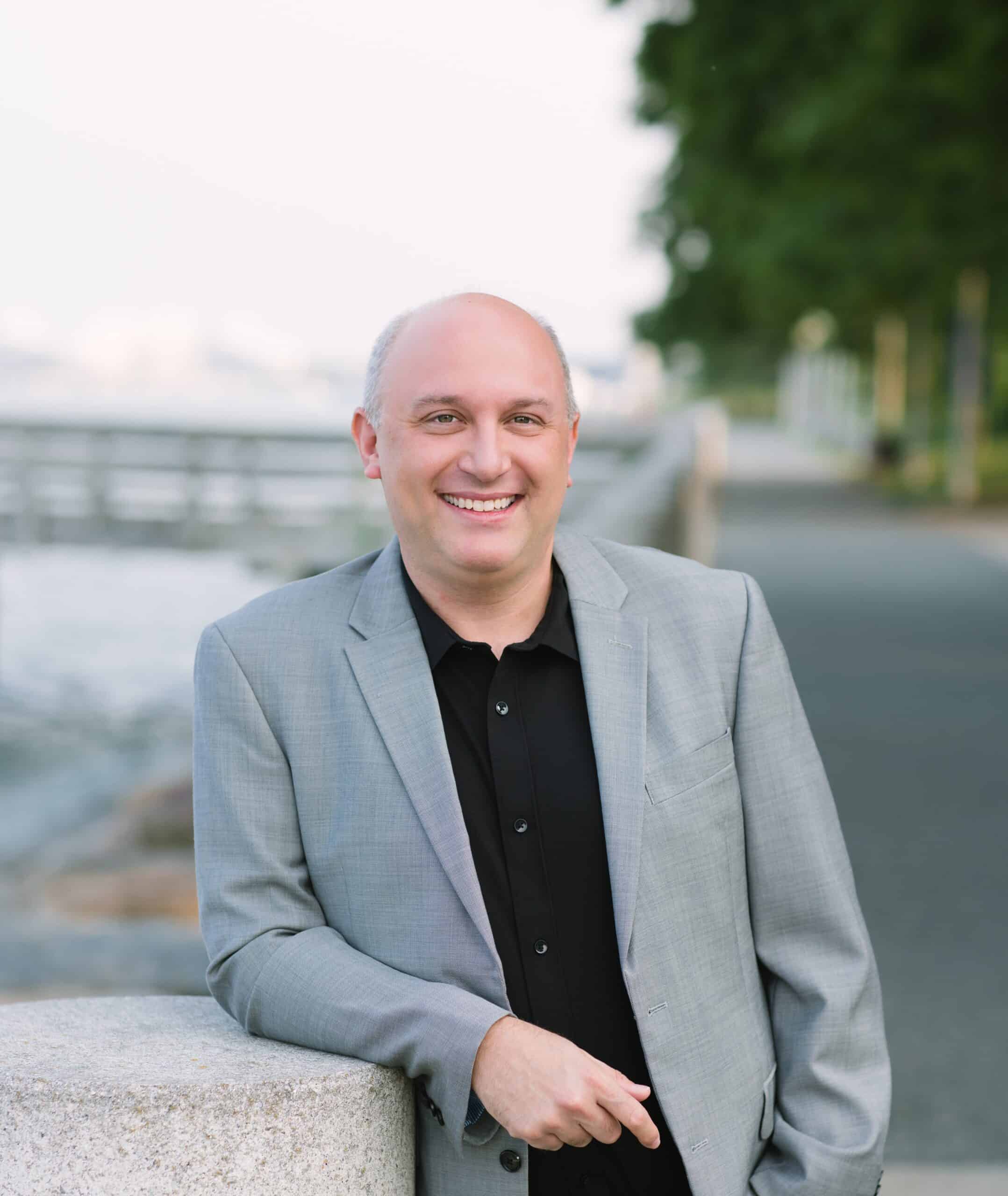
Don Schechter is an entrepreneur, filmmaker, writer, and professor at Tufts University.
He is the author of the forthcoming novel, Ascendants, a speculative sci-fi thriller that explores the intersection of humanity and technology. The story, which Don describes as one that has been “chasing him for years,” serves as the cornerstone of a multi-platform universe.
The world of the novel is further brought to life through The Ascendants Anthology, a series of short films written and directed by Schechter. The film project has earned critical acclaim on the international festival circuit, screening at Hollyshorts (Finalist), the Philip K. Dick Film Festival, Boston Comic Con, the Hot Springs International Film Festival, The Tri-Cities Film Festival, NYCIFF-Fright Fest (winning five awards; including Best Director and Best Horror Science Fiction TV Series), and the Boston International Film Festival (winning “Best Sci-Fi”).
Don is the founder and CEO of Charles River Media, Inc. where he oversees a diverse slate of projects ranging from television, film, corporate, political, and non-profit communications.
A dedicated educator, Don serves as a professor at Tufts University in the Film and Media Studies program, teaching students filmmaking and marketing skills in “From Script to Screen” and The Art and Business of Crafting Compelling Media Campaigns. He is also the co-host of the science fiction podcast No Win Scenario and his TEDx Talk, “Overcoming Imposter Syndrome: Storytellers, Sci-Fi, & Unreliable Mirrors” has been met with positive reviews. Originally from Queens, New York, Don is a lifelong student of speculative storytelling and currently lives outside of Boston.
TALKING POINTS
THEMES & CHARACTERS
- How science fiction has evolved since the turn of the 21st century—from Y2K anxieties, to post-9/11 spiritual reckoning, to today’s fears around AI and genetic technology— and how the evolution of Ascendants mirrors this cultural moment
- Set in 2060, Ascendants imagines a world divided by genetic destiny: Ascendants, who are biologically destined for an afterlife, and Biomasses, who face permanent oblivion.
- Ascendants uses genetic determinism as a contemporary faith system; a religion built into DNA where salvation and damnation are biological facts.
- Ascendants asks: when science replaces God as the arbiter of eternal life, what happens to choice, and the human need to believe in something beyond ourselves.
- At its core, Ascendants sits on a fundamental idea: “It’s not the life you lead; it’s the blood you bleed.”
- The novel follows 3 interwoven characters—a visionary scientist, a grieving believer, and a fierce young woman reckoning with what society has become—each forced to confront what belief truly costs.
- How the story began with a single devastating scene between two characters and evolved over more than 2 decades—from feature screenplay, to short film anthology, to novel—mirroring the cultural shifts of the post-9/11 world and wrestling with questions about belief, technology, and what it means to be humans.
SCI-FI AND AI
- Ascendants emerges at a uniquely prescient moment, examining humanity’s transformation under extreme technological acceleration at the same time AI is fundamentally reshaping society.
- Now, as AI threatens to blur the line between human and machine creation, contemporary sci-fi confronts questions of authenticity, consciousness, and whether technology elevates or erases humanity. Ascendants sit at this intersection, examining both the promise and peril of a world where technology doesn’t just change how we live, but who gets to exist at all.
- Influenced from working on Barry Ptolemy’s Transcendent Man (a film about Ray Kurzweil), and lifelong passion for science fiction, Schechter explores belief, loss, identity, and the cost of extreme ideologies in Ascendants
- Ascendants centers Jewish representation in science fiction, weaving personal history—including a death mirroring the author’s great-great-grandfather’s murder by Nazis—into a speculative future grounded in cultural memory. Why it’s important that speculative futures remain grounded in historical trauma.
- How fear drives much of science fiction including this novel, and how the genre’s relationship with technology shifted from optimism and possibility to caution and warning.
TIMELY TIE-INS
MARCH
- Read an E-book Week: 1-7
- Jewish Book Week: 1-7
- Freedom of Information Day – 16
- World Storytelling Day – 20
APRIL
- International Day of Conscience – 5
- National Encourage a Young Writer Day – 10
- Drop Everything and Read Day (D.E.A.R) – 12
- World Book Day – 23
- Independent Bookstore Day – 25
- DNA Day – 25
MAY
- National Paranormal Day – 3
- National Day of Reason – 4
- Twilight Zone Day- May 11
- Get Caught Reading Month
- (Pre) Summer Reading Roundups
- National Mystery Month
OCTOBER
- Thriller Month
- National Storytelling Day – 5
- National Book Month
PRAISE
“Ascendants is a fascinating look at the intersection between science and philosophy and examines what can happen to those in a capitalistic environment. This modern cyber-punk adventure is a mirror to our current society and values, in the way that the best science fiction intends.”
— Erin Macdonald, PhD, Science Advisor for Star Trek
“Ascendants feels like a high-concept Black Mirror episode stretched into a techno-thriller, maintaining a breakneck pace while forcing you to grapple with profound ethical questions… If you’re a fan of cerebral science fiction, like the works of Philip K. Dick, or modern dystopian thrillers that blend fast action with deep moral complexity (think Altered Carbon), this book is a must-read.”
— Manhattan Book Review
“Don Schechter’s Ascendants is a provocative thought experiment on the future of consciousness and our quest to transcend biological mortality. It underscores the moral imperative to guide our technological ingenuity toward the common good, reminding us that the fate of humanity and the universe itself is in our hands.”
— Ray Kurzweil, Inventor, Author, Futurist
“Ascendants is a gripping techno thriller unlike anything I’ve ever read. The story pulls you in —tackling life and death in unexpected ways that keeps you turning the pages.”
— Derek Tyler Attico author of Star Trek: The Autobiography of Benjamin Sisko