
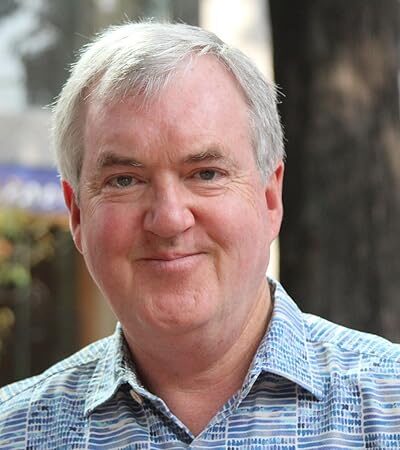
James P. Bevill
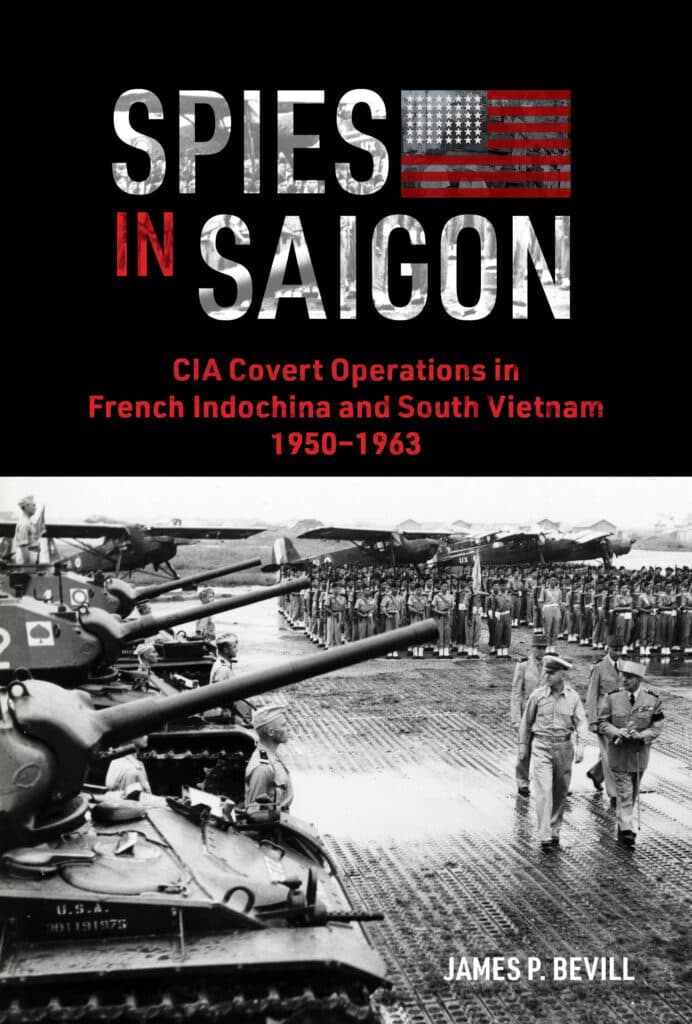
Spies in Saigon
Independent historian and award-winning author of Spies in Saigon, CIA Covert Operations in French Indochina and South Vietnam, 1950-1963
Houston, TX
BOOK COVER
BOOK DETAILS
Pub Date: May 28, 2026
Genre: Nonfiction / History
Publisher: Schiffer Military History Press
Page Count: 496
Format: Hardcover
ISBN: 978-0764370793
Price: $39.99
ABOUT THE BOOK
This is the story that the CIA does not want you to read.
Beginning in 1950, a small cadre of American intelligence officers arrived in Saigon under diplomatic cover to assess the Viet Minh, Chinese Communists, French, and Vietnamese miliitias in an effort to check the spread of communism amid the crumbling French colonial empire. Spies in Saigon reconstructs the missions of these first CIA professionals, revealing how espionage, covert action, and political ambition intertwined during a violent war for national liberation in Vietnam.
Paul Springer was the CIA's first chief of station in Saigon, Vietnam. CIA involvement during the French-Indochina war has never been covered in depth, largely because Springer’s name and mission remained classified for decades. His assignment was followed by Ed Lansdale’s Saigon Military Mission in 1954, tasked with stabilizing South Vietnam following the Geneva Accords that partitioned the country at the 17th parallel. Bevill seamlessly weaves together their stories, along with eye-opening details of a secret CIA black ops site on Saipan, the rise and fall of Ngo Dinh Diem, and how three North Vietnamese double-agents infiltrated the highest levels of the government of South Vietnam. This is the back story of risk, betrayal, and covert strategy in the buildup to America’s war in Vietnam.
ABOUT THE AUTHOR
James P. Bevill is an award winning author and independent historian. His previous works focused on economic, financial, political, military, and naval history. He has guest-curated several educational exhibits on the Republic of Texas at major museums in his home state. A frequent speaker on historical topics, Bevill has been featured in university programs, historical conferences, documentaries, television, radio, and podcast interviews across Texas and beyond.
His first book is The Paper Republic: The Struggle for Money, Credit and Independence in the Republic of Texas. Bevill received four literary awards for this work on the early economic history of Texas and its ultimate role in the annexation of Texas by the U.S. in 1846. He is a prolific public speaker on historical topics relating to his books.
His love of history inspired him to read, organize, and catalogue the voluminous papers of his father-in-law, Paul Springer, who taught at Yale-in-China in 1941-1942 before joining the U.S.
State Department in Chungking. Those papers were the genesis for Blackboards and Bomb Shelters, an engaging story about four young men and their life changing experiences on the ground in Free China during the Japanese occupation.
Professionally, Bevill is a Senior Vice President-Wealth Management in the River Oaks office of UBS Financial Services in Houston. He lives in Houston with his wife.
TALKING POINTS
- The CIA’s first intelligence mission during the French- Indochina war was based out of the American Legation in Saigon beginning in May 1950, followed by the CIA’s Saigon Military Mission in 1954 tasked with stabilizing South Vietnam following the Geneva Accords that partitioned the country at the 17th parallel.
- How the US secretly collaborated to arm French Union forces against the Viet Minh in an effort to use the colonial puppet regime of Bao Dai as a buffer against the spread of global communism.
- The shocking revelations of a secret CIA training base on Saipan, where foreign insurgent groups were trained in paramilitary operations and inserted into Vietnam, North Korea, Communist China, and Iran.
- The outsized influence that the sect armies – Binh Xuyen, Hao Hoa, and Cao Dai militia groups had in destabilizing Vietnam in the mid-1950s, nearly toppling Diem’s first administration—with the clandestine backing of French military forces in Saigon and Cholon.
- How three North Vietnamese double agents were able to completely infiltrate the South Vietnamese military, intelligence services, and press corps in the late 1950s to obtain highly classified US military plans that were sent to Hanoi – providing them with a full set of US and South Vietnamese attack plans, enabling them to develop effective countermeasures.
- The nature of intelligence work is, in itself, secret, with intelligence officers routinely integrated into legations, consulates and embassies around the world. Often unknown are the covert operations of the CIA, the impact of enemy spies, and the gravity of the information they obtain for foreign governments. Also unknown to many are the dangers of travel, the kaleidoscope of political factions, and the sometimes invisible ideological elements that have to be identified and navigated to gain strategic information. Spies in Saigon offers a fascinating and timely perspective on how the CIA dealt with these issues in Vietnam and Southeast Asia in the 1950s and early 60s.
TIMELY TIE-INS
March
- National Reading Month
- National Vietnam War Veterans Day – 29
April
- World Book Day – 23
- Fall of Saigon – 30
May
- Texas Writers Month
- National Military
Appreciation Month - Memorial Day – 25
- Spies in Saigon Publication Day – 28
June
- French-Indochina War Memorial Day – 8
- International Archives Day – 9
- Father’s Day – 21
July
- Fourth of July – 4
- United States Intelligence Professionals Day – 26
August
- National Back to School Month
- National Book Lover’s Day – 9
September
- Read a Book Day – 6
- National POW/MIA Recognition Day – 19
SUGGESTED INTERVIEW QUESTIONS
- What was your approach to making historical and intelligence material accessible to general audiences through this book?
- What motivated you to explore Paul Springer’s story after it remained classified for decades?
- What were the biggest surprises you uncovered about early CIA operations in Southeast Asia?
- How did you verify and contextualize intelligence records and primary documents from a time when much was classified?
- How did your personal connection to Paul Springer’s papers shape your narrative choices?
- How do stories of espionage in Vietnam compare with other covert operations you’ve studied in history?
- What is your perspective on the intersection of historical scholarship and public education?
- Why is it important to talk about these events today?
- What broader lessons can readers take from your work about history, intelligence, and secrecy?

BOOK DETAILS
Pub Date: May 17, 2022
Genre: Memoir / Christian Inspirational
Publisher: She Writes Press
Page Count: 304
Format: Paperback
ISBN: 978-1647429003
Price: $15.99