

John Mutter
Fortune and Glass
Journalist, author, and editor-in-chief and co-founder of Shelf Awareness
New Hampshire
BOOK COVER
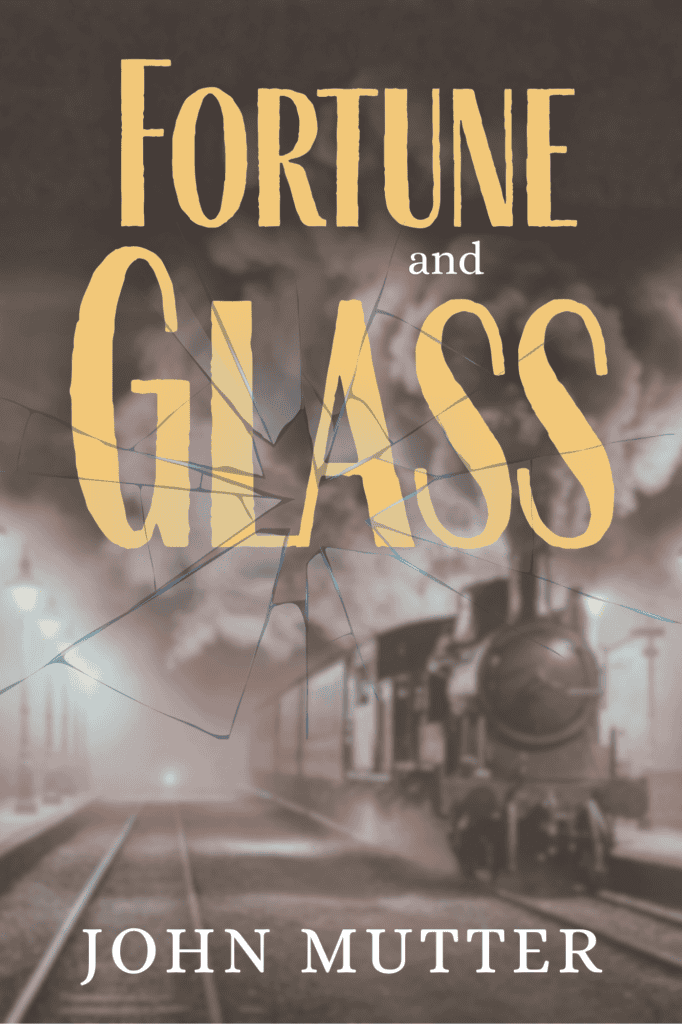
BOOK DETAILS
Pub Date: October 6, 2026
Genre: Fiction / Literary / Historical
Publisher: Left-Field Publishing
Page Count: 390 pages
Format: Hardcover
13-digit ISBN: 9781966883074
Price: $30.00
ABOUT THE BOOK
“An unusually restrained but powerful novel about the darkest of times.”
—Kirkus Reviews (STARRED)
How do you stay human inside a regime built to erase you?
Berlin, 1932. Germany’s fragile democracy is fracturing, its ideals cracking like thin glass as political violence and paranoia seep into the streets. In the midst of this tension, Rudi, a young Foreign Ministry official, meets Sara, an unpredictable, morally fierce Jewish woman whose connection with him is immediate and combustible. By 1943, the Germany they knew has vanished. Rudi works at the center of Nazi power, performing his duties by day and passing intelligence to the Allies by night—until Sara’s unexpected return threatens to unravel the life he has carefully constructed to survive.
A debut novel, Fortune and Glass is philosophical spy fiction and a literary love story about private choices, secret resistance, and the cost of staying human inside a system determined to erase individuality. Lyrical, atmospheric, and morally complex, it explores the gray zones of living under authoritarianism and asks a timeless question: Who are you when everything falls apart?
Melding literary fiction, psychological suspense, and historical storytelling, Fortune and Glass is an intimate exploration of identity, conscience, and quiet resistance inside a society sliding into extremism. It explores how ordinary people navigate love, loyalty, and moral responsibility inside systems that reward silence and punish dissent—questions that feel as urgent now as they did then. Emotionally rich and philosophically resonant, it turns away from spectacle and heroics to focus on the private cost of survival.
Fortune and Glass is a deeply human story that reimagines the WWII novel by shifting the lens inward toward the moral choices that define us when history fractures beneath our feet. For readers of All the Light We Cannot See, The Nightingale, The Book Thief, The Alice Network, and the espionage of John le Carré, this debut novel from an established publishing voice blends intimacy, danger, and moral complexity into a story that feels both timeless and urgent.
ABOUT THE AUTHOR
John Mutter is a journalist who covers the book world and is the editor-in-chief and co-founder of Shelf Awareness, the online company with publications for booksellers, librarians, and book lovers. He earlier was an editor for more than 20 years at Publishers Weekly. He graduated from Sarah Lawrence College and studied for a year in Germany. He has long been interested in history, literature, language, and politics. A resident of various points in the Northeast, including New York City, he now lives in the mountains of New Hampshire with his family. Fortune and Glass is his debut novel.
TALKING POINTS
Why this story matters now: Democracy under pressure, the normalization of extremism, and the question of what ordinary people do when institutions fail.
The insider’s dilemma: What do you do when you work inside a corrupt system? The character of Rudi is a civil servant, not a villain and not a hero. His ambiguity is the point. This speaks directly to questions audiences are asking about institutions today.
The author’s personal connection to Germany: Mutter studied in Germany for a year and has a lifelong interest in its history, language, and politics. There’s a personal “why this book” story worth drawing out here.
Shelf Awareness and the book world as context: As a book industry insider writing his debut novel, there’s a genuine “journalist turns novelist” story here — how does covering books for decades shape how you write one?
The love story as resistance: How intimacy and private loyalty become political acts under authoritarianism— romantic relationships as the last space the state cannot fully colonize.
Cautionary tale: The novel opens in 1932, as Germany’s fragile democracy is fracturing. Mutter can speak to what historians have documented about how democracies slide, and what that arc looked like from the inside.
What WWII fiction still gets wrong: An experienced book journalist is uniquely positioned to talk about the genre itself—what’s been overdone, what’s been ignored, and what Fortune and Glass does differently.
TIMELY TIE-INS
October
- National Book Month
- Banned Books Week – 4–10
- National Storytelling Day – 5
November
- Kristallnacht Remembrance (The “Night of Broken Glass”) – 9
- 37th Anniversary of the Fall of the Berlin Wall – 9
SUGGESTED INTERVIEW QUESTIONS
- You’ve spent decades covering books as a journalist. What finally made you write one and why this story?
- You studied in Germany for a year. How did that personal connection shape the novel, and what did you discover in your research that surprised you?
- The novel opens in 1932, before the worst atrocities begin. Why was that starting point important to you?
- Rudi works inside the Nazi foreign ministry by day and passes intelligence to the Allies by night. He’s not a simple hero or villain. What drew you to this morally ambiguous protagonist?
- You describe this as a “philosophical spy novel.” What does philosophy have to do with espionage?
- The novel is set in a moment when a democracy that many people assumed was stable was quietly becoming something else and the characters who saw it happening had to decide, in very private ways, how to respond. Without putting too fine a point on it, what do you think that historical moment asks of us right now?
- You’ve said the novel focuses on the private cost of survival rather than spectacle. What gets lost in WWII fiction that centers heroics and battle?
- Sara is described as “morally fierce.” How does her character challenge Rudi — and the reader?
- The title Fortune and Glass suggests fragility and luck. Can you talk about what that phrase means in the context of the story?
- The novel is set in a democracy fracturing under political pressure and paranoia. Without drawing direct parallels, what do you hope readers take from that historical moment into their own lives?
- Self-censorship is one of your talking points — the idea that power operates through what people choose not to say. Where do you see that dynamic at work today?
- Rudi essentially builds a double life to survive. Is that a form of integrity or a form of complicity — and does the novel try to answer that question?
- As editor-in-chief of Shelf Awareness, you’ve reviewed thousands of books. Did that experience make writing your own novel harder or easier?
- What do you hope readers who think they’ve read every WWII novel will find here that they haven’t encountered before?
- What’s the one historical figure, moment, or document from your research that you couldn’t stop thinking about?

BOOK DETAILS
Pub Date: May 17, 2022
Genre: Memoir / Christian Inspirational
Publisher: She Writes Press
Page Count: 304
Format: Paperback
ISBN: 978-1647429003
Price: $15.99